An Updated Framework for Current K-12 Challenges.
If you have worked with the National Dropout Prevention Center in the past, you are likely familiar with our foundational 15 Effective Strategies for Dropout Prevention. For years, that framework has served as the baseline for dropout prevention work nationwide.
However, the K-12 landscape has changed significantly. School systems are managing unprecedented rates of chronic absenteeism, complex behavioral needs, and deep instructional disengagement. To address these current realities, NDPC’s research framework has evolved from "the 15 Effective Strategies for Dropout Prevention" into Effective Strategies & Services for Graduation Improvement.
This update shifts the focus from a reactive, intervention-based approach to a proactive, systemic model designed to improve graduation outcomes from the ground up.
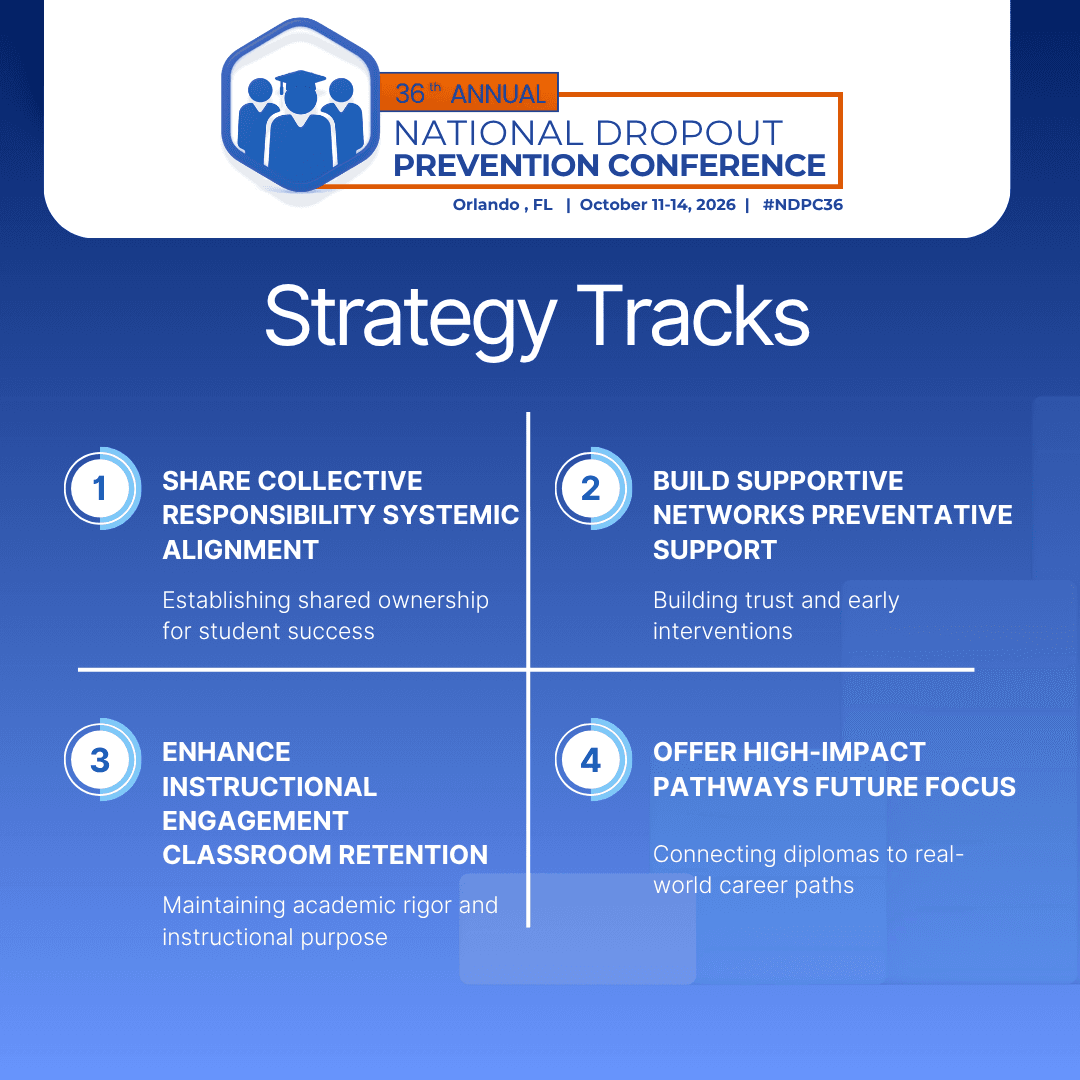
For our 36th Annual Conference, the entire program is structured around the four pillars of this updated model. We have organized the schedule into four operational strategy tracks to help you navigate the event, align your team’s coverage, and fulfill requirements for professional credentials. Select a strategy below to see how it shapes the conference agenda.
Share Collective Responsibility
Track 1: Share Collective Responsibility for All Students This track focuses on system-level strategy and school culture, moving away from temporary, isolated programs toward a shared framework where every adult owns student outcomes. Content addresses building collaborative intervention teams, utilizing data systems to track attendance and behavior trends, and designing school-wide structures that support graduation.
- Modernized Framework Focus: Shifting from isolated dropout interventions to an integrated, data-driven graduation culture.
Build Supportive Networks
Track 2: Build Supportive Networks for All Students This track focuses on the practical mechanics of supporting student well-being and connection before academic failure occurs. Topics cover established strategies for creating two-way partnerships with parents and caregivers, managing support workloads efficiently, and scaling mentoring and community-connected programs to support students facing significant external barriers.
- Modernized Framework Focus: Moving from surface-level student tracking to relationship-driven support networks.
Enhance Instructional Engagement
Track 3: Enhance Instructional Engagement Strategies This track treats daily classroom instruction as a primary tool for student retention, addressing the reality that instructional disengagement leads directly to dropout risks. Topics focus on active learning models, structuring lessons that challenge students without overwhelming them, and using technology and course customization to re-engage students who have experienced past academic failure.
- Modernized Framework Focus: Using rigorous, student-centered instruction as a clear strategy for student retention.
Offer High-Impact Pathways
Track 4: Offer High-Impact Learning Pathways Students persist when they understand the purpose of their diploma. This track covers the development of alternative education models that offer structural flexibility alongside personalized support. It also highlights Career and Technical Education (CTE) programs that coordinate directly with regional industries to give students tangible work credentials before graduation.
- Modernized Framework Focus: Creating flexible, career-aligned options for students who need non-traditional routes to a diploma.
Interested in attending 36th Annual National Dropout Prevention Conference?
Secure your team's spots for the 36th Annual National Dropout Prevention Conference in Orlando, Florida. Coordinate your leadership, instructional, and support staff across our four updated strategy tracks to bring a unified graduation improvement model back to your school or district.